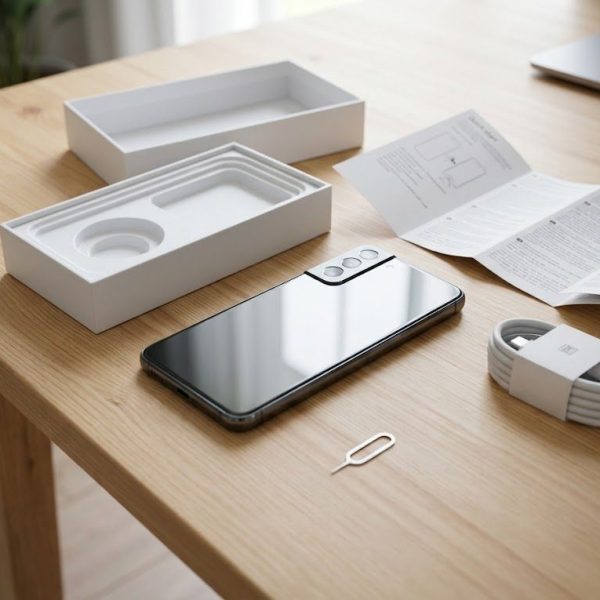
Open the box of a new phone and you will find a quick start leaflet, a safety sheet and a regulatory card printed in several languages. Most buyers throw them in a drawer. Yet those few pages are some of the most carefully produced documents in the whole mobile industry, and the way they are translated says a lot about how seriously a brand treats its customers abroad.
Phones now ship to dozens of markets on the same launch day. That puts enormous pressure on the people who turn engineering text into clear instructions in Polish, Portuguese or Korean. A single unclear sentence about charging or water resistance can turn into thousands of support tickets.
The hidden text inside every handset
Printed leaflets are only the visible part. A modern smartphone carries tens of thousands of interface strings: settings labels, error messages, battery warnings, camera modes and accessibility prompts. Each one has a strict character limit because it must fit on a small screen without being cut off.
Translators working on this material rarely see the finished screen. They receive a spreadsheet of short phrases with little context. The word "charge" might refer to a battery, a payment or a fee for roaming. Without notes from engineers, even an experienced linguist can guess wrong.
Why battery and safety wording is so sensitive
Lithium batteries are regulated products. Warnings about heat, swelling and approved chargers have to be accurate in every language the device is sold in. A softened translation that turns "do not" into "try not to" changes the legal meaning of the instruction.
The same applies to battery optimization features. When a phone tells users it has paused background apps to save power, the message must explain what happened and how to reverse it. Vague wording makes people think the device is faulty, and they return it.
Standards that shape instructions for use
Manufacturers do not write manuals however they like. The international standard IEC/IEEE 82079-1 on information for use sets out principles for instructions that accompany products, including clarity, consistency and suitability for the target audience. It expects information to be provided in a language the user can understand.
That last point matters for global launches. A manual that is technically present but poorly translated does not meet the spirit of the standard. Regulators and consumer groups increasingly look at whether instructions are usable, not just whether they exist.
Where machine translation helps and where it fails
Phone makers use machine translation heavily for first drafts, release notes and internal documents. It is fast and cheap, and for repetitive text it performs well. The trouble starts with short, ambiguous strings and safety content.
An engine has no idea that a button label must stay under twelve characters, or that a certain term was already approved for the previous model. It may translate the same feature three different ways across one menu. Users notice these inconsistencies quickly, and reviewers mention them in launch coverage.
This is why serious brands send interface text, packaging and warranty documents to specialists in technical translation services who maintain terminology databases and check strings in context before release.
Terminology memory across product generations
A flagship phone is rarely built from scratch. Each new model inherits most of its software and documentation from the previous one. Good translation teams keep a memory of every approved segment, so a sentence translated two years ago is reused rather than rewritten.
This saves money, but the bigger gain is consistency. When a camera mode carries the same name in the menu, the online help and the advertising, customers trust what they read. When it changes from screen to screen, they start to doubt the product itself.
Testing translations on the actual screen
The final step that separates careful brands from careless ones is linguistic testing. Native speakers install a pre-release build and walk through every menu in their language. They look for truncated words, wrong plural forms, broken date formats and buttons that no longer make sense.
Some languages run up to forty percent longer than English. German compound nouns and Finnish case endings regularly overflow fixed layouts. Testers flag these problems so developers can adjust the interface or the translator can find a shorter equivalent.
Right to left and complex scripts
Arabic, Hebrew and Urdu read from right to left, which means icons, progress bars and swipe gestures may need to be mirrored. Scripts such as Thai or Hindi have stacked characters that can be clipped if line height is set too tight.
These are not cosmetic details. In markets where a phone is the main or only computer a person owns, the device must feel native from the first boot. A clumsy setup wizard can push a buyer toward a competitor before they have even made a call.
What a good process looks like
Teams that get this right tend to follow the same pattern. Engineers write source text with translation in mind and add context notes. Specialists translate with access to screenshots and an approved glossary. Native testers then review the build on real devices.
For a deeper look at why this discipline exists, the PoliLingua article on why technical translation matters explains how small wording errors in manuals and specifications create real costs for manufacturers.
What this means for buyers
Next time you unbox a phone, take a minute to read the leaflet in your own language. If it is clear, consistent and free of odd phrasing, someone did careful work behind the scenes. If it reads like a word puzzle, the brand probably cut corners there too.
The health features deserve the same caution as the battery warnings. Heart-rate, sleep and emergency functions produce instructions and records that users may later share with a doctor. When that text leaves the phone as a report or referral note, it stops being interface copy and becomes a healthcare document. Manufacturers that treat it that way use medical translation services for the health layer, so a warning or reading means the same thing in every market.
Clear instructions are part of the product, not an afterthought. As phones gain more AI features, battery tricks and health sensors, the amount of text users must understand will only grow. The companies that treat translation as engineering work will be the ones customers trust in every market.